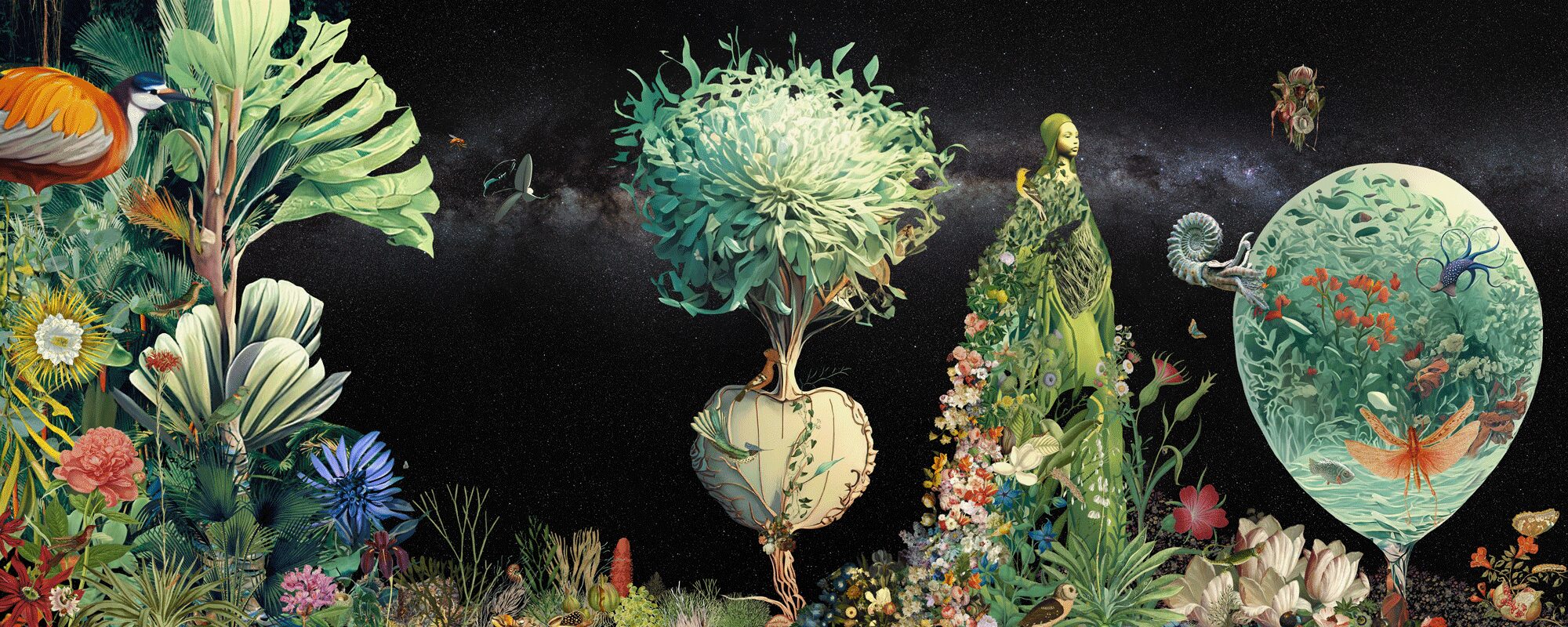
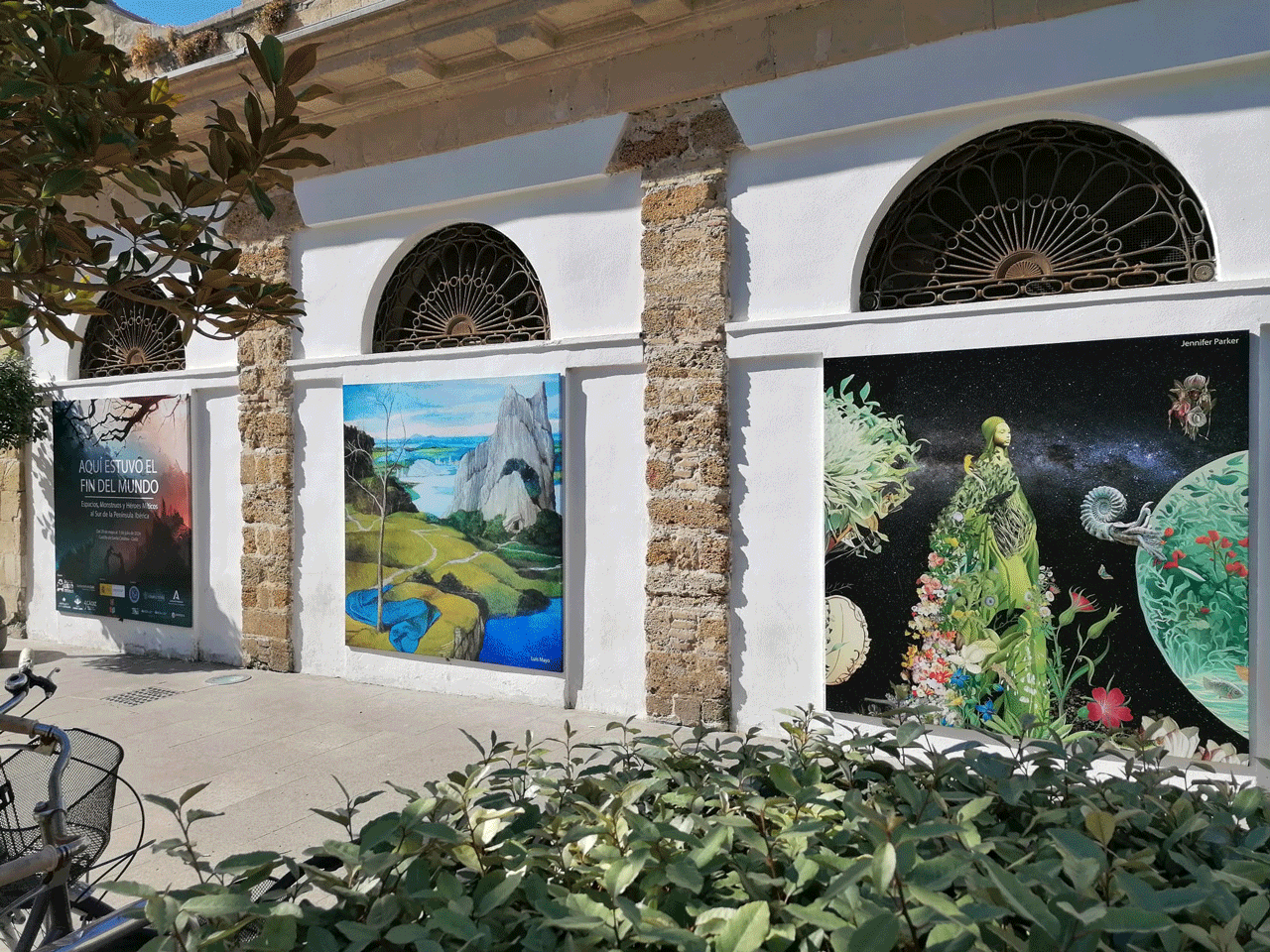
Gaia was created for Aquí Estuvo El Fin Del Mundo: Espacios, Monstruos y Héroes Míticos at the Castle of Santa Catalina, Sala de San Nicolás Alto, Cádiz, Spain. The exhibition, organized by the Spanish Association of Friends of Children’s and Young People’s Books and the Municipal Culture Foundation of the Cádiz City Council, set Greek mythology within the Castillo de Santa Catalina.
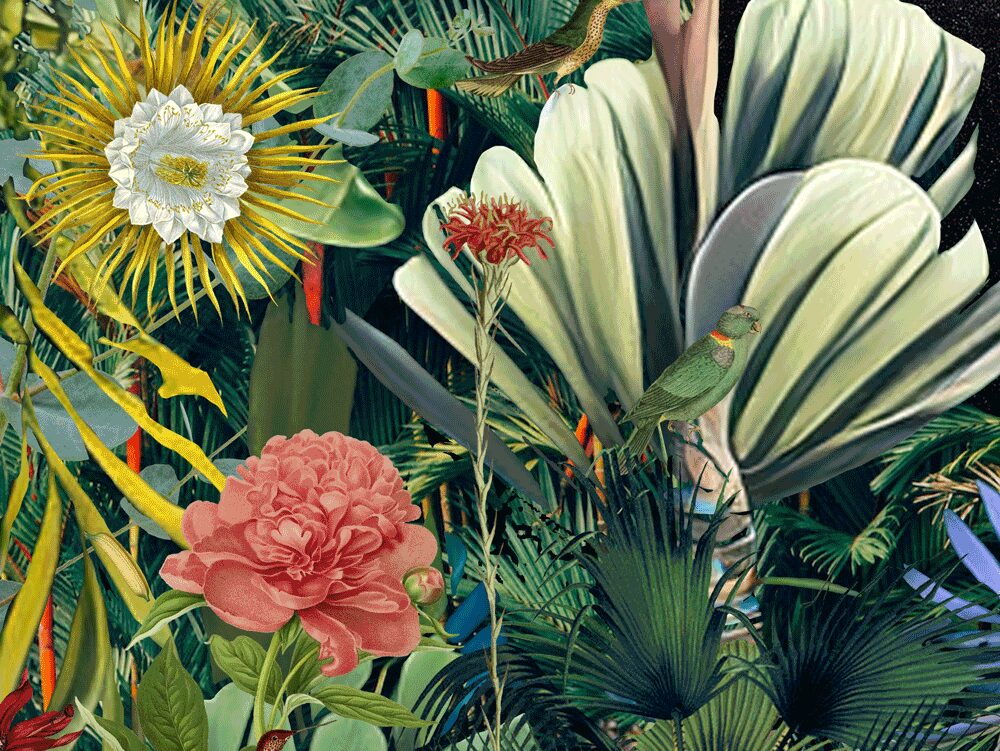
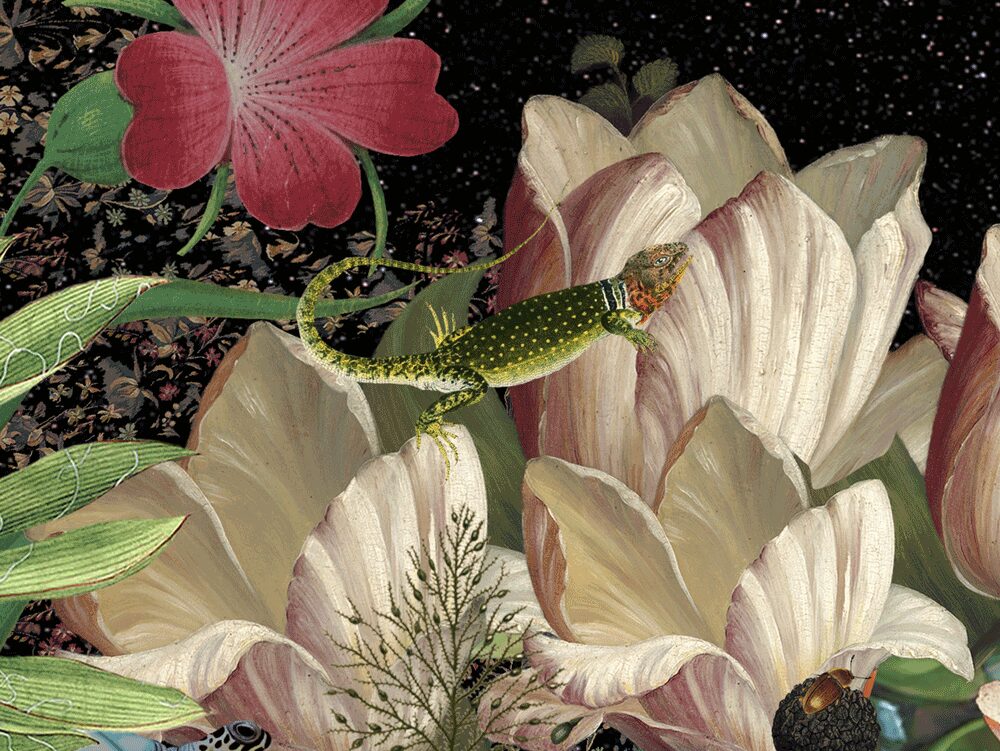
The exhibition situated Greek mythology within the Castillo de Santa Catalina, a historic fortress constructed in the late 16th century following the city’s 1596 attack by Anglo-Dutch forces. For this project, I researched 17th– and 18th–century European still-life paintings and botanical illustrations, which often depicted plants and specimens circulating through Mediterranean and Atlantic trade routes, collaging them with my own digital drawings to create GAE/Gaia, a 24 × 48 in. print for the exhibition, which was also presented as a large mural in the Cádiz Central Market.
In Greek mythology, Gaia (pronounced /ˈɡeɪə/ or /ˈɡaɪə/; Ancient Greek: Γαῖα, Gaîa, a poetic form of Γῆ, meaning ‘land’ or ‘earth’) is the personification of the Earth herself—a fertile, unyielding force, birthing life from her body through sheer will. Gaia’s story is one of creation and control, of power wrested and reshaped, a figure both nurturing and dangerous. In Roman mythology, she becomes Terra, but her essence remains the same—a mother to all, bound yet uncontainable.